
Office of Real Estate Planning and Development
Preservation and Expansion of Affordable Housing
Since 1939, the Providence Housing Authority (PHA) has developed 13 affordable housing communities throughout the City of Providence and currently manages 2,606 apartments for families, senior citizens, and adults with disabilities as part of HUD’s public housing program. In PHA’s strategic plan, the Authority restated its vision working with its residents will be a best-in-class leader in creating safe, vibrant communities that promote pathways to opportunities and will be a place where people are proud to live and work.
In alignment with the strategic plan, the Providence Housing Authority is embarking on a multi-year initiative to revitalize its 2,606 public housing units utilizing various repositioning programs from HUD, Low Income-Housing Tax Credits, and state and local funding sources. Concurrently with these revitalization projects, PHA is exploring strategic partnerships and development opportunities to utilize its Faircloth Authority and Project Based Vouchers (PBVs) to create new affordable apartment units in the City of Providence.
Development Projects and Initiatives
What is Repositioning?
Over the past 15 years, HUD has developed programs and tools which allow public housing authorities access to additional sources of funding to preserve and revitalize properties. These various tools and programs fall under the umbrella term “Repositioning.” Repositioning is a process which converts the federal housing assistance a property receives from the public housing program (aka Section 9) to Section 8 with Project-Based Rental Assistance (PBRA). Repositioning tools and options provided by HUD include:
- Rental Assistance Demonstration program (RAD)
- Section 18 Demolition and Disposition
- RAD / Section 18 Construction Blends
- Streamlined Voluntary Conversions
- Homeownership Programs
After repositioning, the federal government provides rental assistance to properties through a HAP contract and residents continue to benefit from the same rights and protections that they had under the public housing program. Repositioning does NOT change the core mission or values of the housing authority.
Why Reposition?
The Section 8 program is considered a more stable and consistent source of federal funding. This stability allows PHA to leverage long-term Section 8 HAP contracts to raise equity (often with low-income housing tax credits) and secure debt (loans). This leverage can help agencies achieve strategic goals, address a backlog of capital needs, and build long-term reserves for each property.
RAD and RAD Section 18 Construction Blends
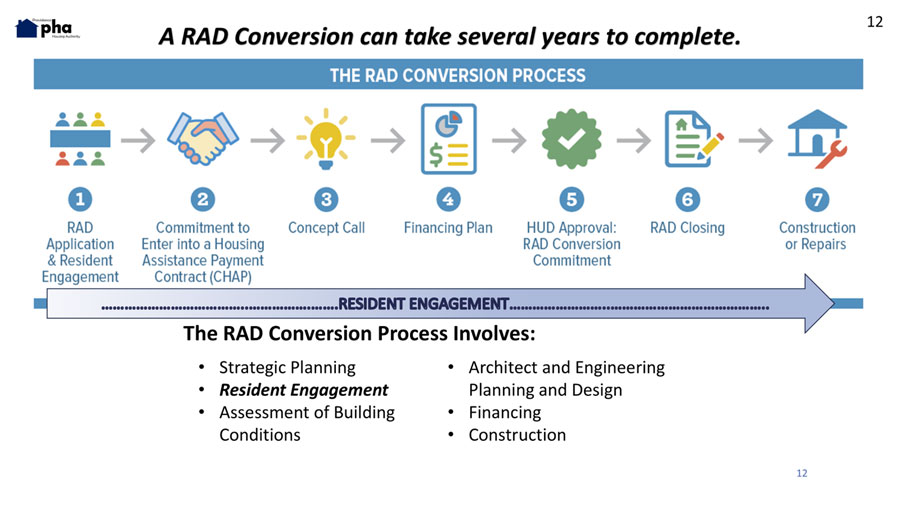
The Rental Assistance Demonstration program (RAD) is one of the repositioning tools or options available from HUD and, like other repositioning tools, converts the federal housing assistance a property receives from Public Housing (Section 9) to Section 8 via Project Based Rental Assistance and a HAP contract. Since its inception in 2011, the program has been successful across the country with authorities converting 1,890 projects covering 260,623 units and an additional 594 projects covering 64,699 units are currently in the RAD pipeline (as of March 20, 2026).
watch this HUD prepared RAD Video (5 minutes):
https://www.hud.gov/sites/dfiles/Housing/documents/HUD_RAD_Resident-Engagement.mp4
View these HUD prepared RAD Fact Sheets:
RAD Fact Sheets (English)
RAD Fact Sheets (Spanish)
Click here for answers to “Frequently Asked Questions (FAQs)”
Resident Engagement
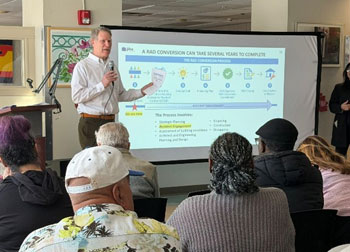
Resident engagement is a cornerstone of a RAD conversion. The PHA is committed to exceeding the program requirements by utilizing various communication channels with our residents, including written notices, regularly scheduled meetings, providing access to information via this website, emails, and text messaging.
Resident Rights
HUD has included many resident rights and protections into the RAD conversion program.
- Rents remain affordable. Under the Section 8 program, residents continue to pay 30% of their adjusted gross income in rent, less any utility allowance.
- RAD converted projects maintain the same resident processes, protections, and rights that exist under public housing; however, tenants will be required to sign a Section 8 lease. Residents in good standing have the absolute right to return to the development once rehab or construction is complete with no re-screening.
- No residents (who are lease compliant) will lose their housing assistance.
- No residents may be displaced involuntarily because of repositioning. If a property undergoes a substantial renovation necessitating residents to temporarily relocate during construction, residents are guaranteed the right to return to the property (but cannot be guaranteed to return to the same unit) once construction is completed. In addition, all costs associated with relocation are paid for by the converting project.
- Following conversion, residents will be protected by standard Section 8 regulations for termination notification and grievance procedural rights.
- FSS & ROSS participants may continue in the programs.
- Following conversion, residents may request a tenant-based voucher (TBV) after two years of residency at the converted property (“choice-mobility”). A tenant-based voucher allows you to rent housing in the private rental market. Residents who request a tenant-based voucher from the PHA will receive priority for the PHA’s next available voucher.
- Residents will continue to have the right to establish and operate a resident organization. The resident organization will be eligible for resident participation funding.
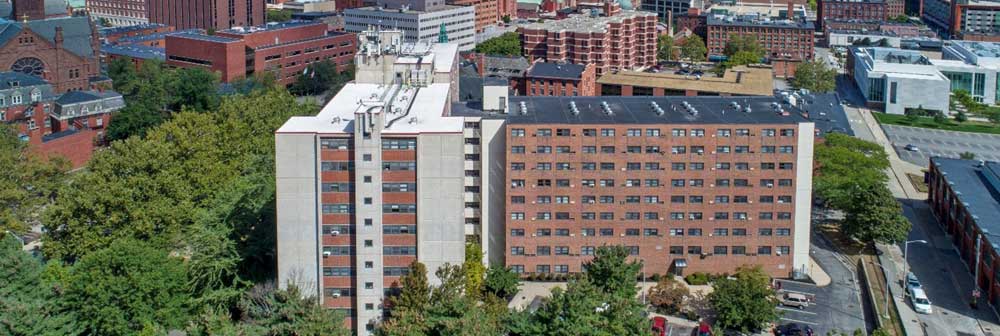
Dexter Manor:
Project Status:
Pre-Development and Planning
Project Summary:
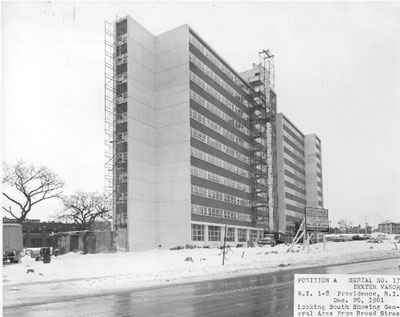
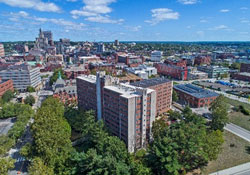
Dexter Manor I, built in 1962, is a 200-unit 10-story elderly/adult disabled/general population high-rise building located on the edge of Providence’s downtown neighborhood. In 1984, an 8-story wing (Dexter Manor II) was added to the building, creating an additional 91 apartments and office space for the PHA’s Administrative Offices. The two wings are collectively referred to as “Dexter Manor” which contains a total of 291 apartments and includes a community room, laundry room, and property management office.
The current unit mix for Dexter Manor is as follows:
| 120 | studios |
| 144 | one-bedroom units |
| 27 | two-bedroom units |
| 291 | Total Units |
To preserve and sustain Dexter Manor as a vital source of deeply affordable units in the downtown core of Providence, the buildings require a moderate to substantial renovation. A 2023 draft capital needs assessment observed that the buildings were in fair to good condition; however, individual building components and systems had reached the end of their estimated useful life (EUL). The report specifically identified the following critical and non-critical repairs: roof replacement, exterior wall repairs and building-envelope improvements for energy efficiency, window replacement, water supply and waste plumbing replacement, heating and cooling system equipment replacement, electric system distribution system replacement, ventilation system replacement, and fire alarm control panel. Additionally, the report recommended upgrades to meet current building codes and accessibility standards, including the Uniform Federal Accessibility Standards (UFAS) and those under the Americans with Disabilities Act of 1990. The project would also include a comprehensive hazardous material inspection and abatement, new kitchens and baths, and a refresh of common areas to enhance resident quality of life.
Project Address and Assessor’s Plat Number(s):
Dexter Manor
100 Broad Street
Providence, RI 02903
Lot 22, Plat 24
Project Team:
Project Schedule:
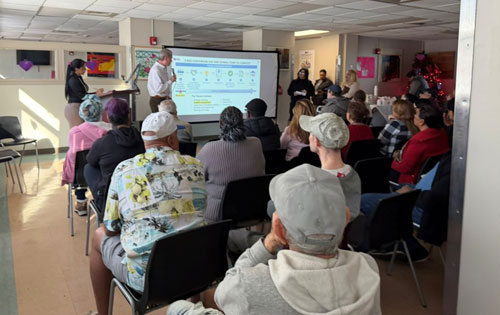
Resident Engagement (Events, Handouts, and Presentations):
Completed Milestones:
- March 04, 2026:
- RAD Application Submitted to HUD
News and Updates:
Parcel 41:
Project Status:
Pre-Development and Planning
Project Summary
(of the I-195 Redevelopment District).”
The I-195 Redevelopment District (195 District or District) was created in 2011 when a section of Interstate 195 was relocated, freeing over 26 acres of former highway land for redevelopment. The 195 District and its oversight Commission were created to manage the sale, marketing and redevelopment of this land. Seven acres were designated as open space, and 19 acres were slated for redevelopment. The mission of the 195 District is to develop the former 195 land in Providence to create a thriving “innovation district” and neighborhood that attracts investment and fosters economic growth and opportunity.
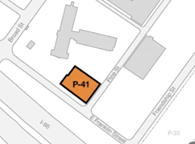
Parcel 41 of the 195 District is located at the intersection of East Franklin Street and Pine Street, directly adjacent to Dexter Manor. In late 2024, the 195 District approached the PHA to assess the development potential of the 12,600 s.f. parcel. The assessment determined that the development of Parcel 41 could be mutually beneficial to both agencies. It is estimated that this collaborative approach could yield between 60 and 120 new housing units (initial studies assumed a five-story wood framed structure over a podium building typology).
The goal of the new development is to create a financially sustainable, mixed-use/income community that complements Dexter Manor, provides high-quality new housing units that help address the state’s housing crisis, and contributes to the revitalization of the surrounding downtown neighborhood. The project is expected to include ground-level activation such as community services and/or amenities that are accessible to the new community and the residents at Dexter Manor.
Project Address and Assessor’s Plat Number(s):
Parcel 41
295 Pine Street
Providence, RI 02903
Lot 666, Plat 24